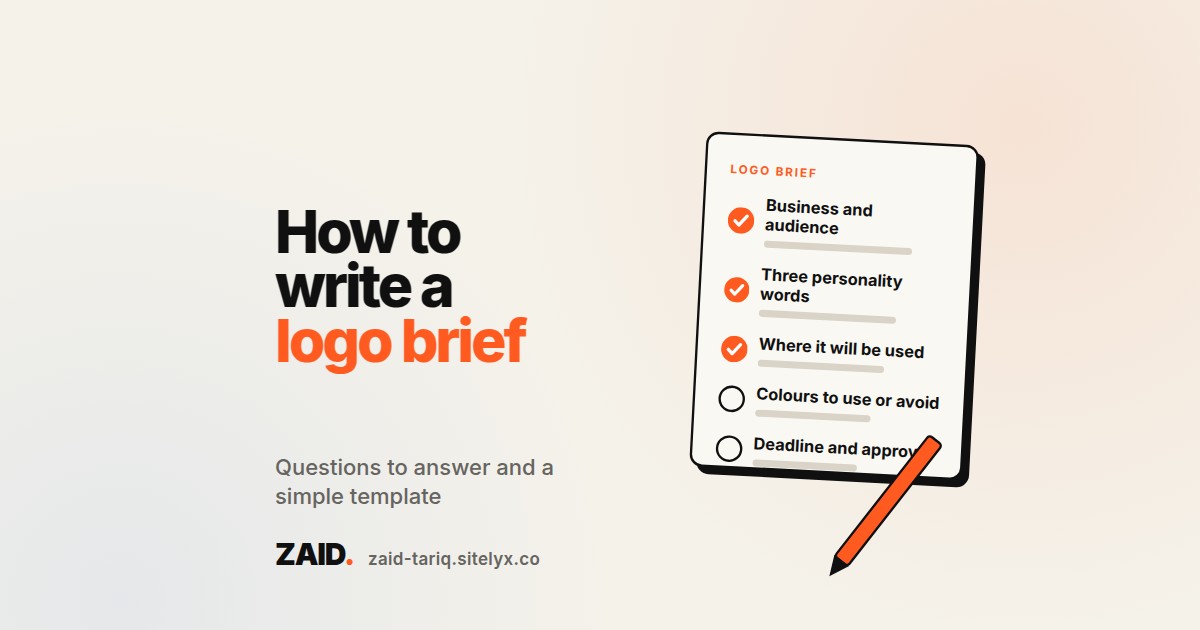
A logo design brief is a short document that tells a designer what you are building, who it is for and where the logo will live. A good brief saves rounds of revisions, because the designer starts from your real needs instead of guessing. A vague one usually produces a handsome logo that does not fit the business.
This guide walks through what a brief should contain, shows a weak brief next to a useful one and ends with a template you can copy and fill in.
What a logo design brief is for
The brief has three jobs. It gives the designer the facts they cannot find on their own, such as what makes your business different. It sets the limits, such as budget, timing and where the logo must work. And it gives both sides something to point back to when feedback arrives, so the conversation stays about the goal and not about personal taste.
What to include in a logo design brief
1. About the business
Write two or three sentences on what you do, who you serve and what makes you different. Include the exact name and how it is spelled and capitalised, and any tagline that should sit with the logo.
2. Your audience
Describe who will see the logo most. Age, interests and where they meet your brand all matter. A logo for parents buying snacks and a logo for a law firm should not feel the same.
3. Competitors and the market
List a few competitors and say what you like or dislike about how they present themselves. The aim is to stand apart from them without looking out of place in your category.
4. Personality words
Pick three to five words for the feeling of the brand, for example friendly, bold and practical. Add one or two words to avoid. These words guide hundreds of small decisions about shape, colour and lettering.
5. Likes, dislikes and references
Share logos and brands you admire, and say exactly what you like about each: the colour, the simplicity, the lettering. Share a few you dislike as well. Examples are much clearer than adjectives.
6. Where the logo will be used
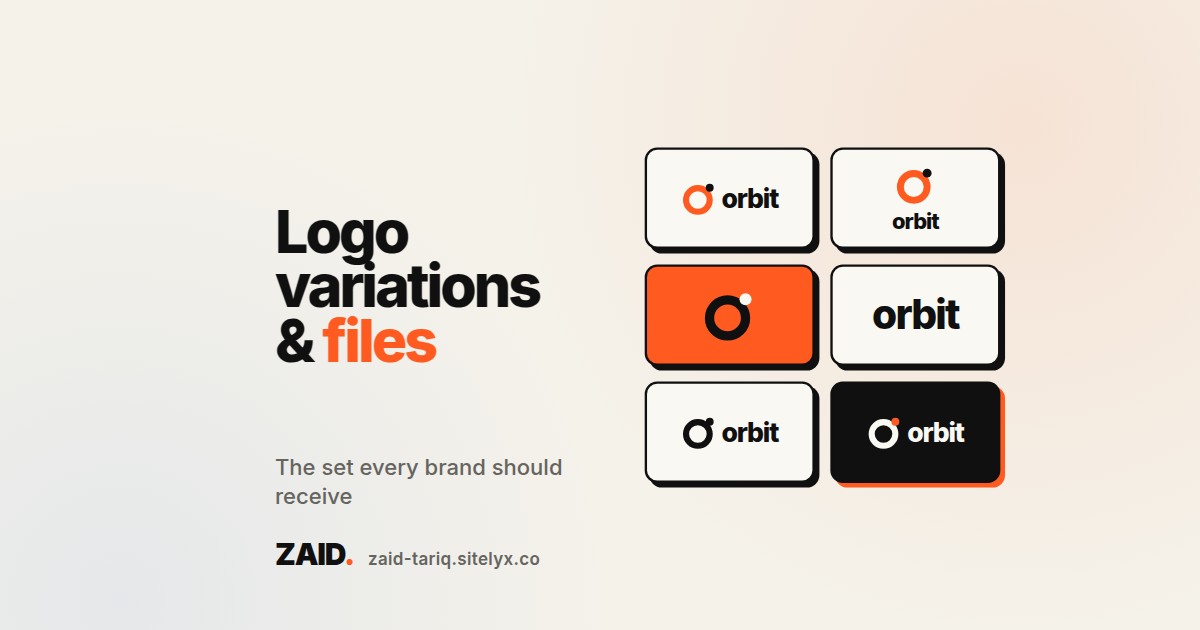
List every place the logo has to work: website, social profiles, packaging, signs, uniforms, vehicles, printed material. A uniform is the brand that staff wear every day, so it has to be practical as well as recognisable. Knowing this early shapes how simple the logo needs to be and which versions the designer should prepare. My guide to logo variations and file formats explains the set most brands need.
7. Practical requirements
Mention colours you must use or avoid, any existing assets that must stay, and the file formats you expect at the end.
8. Deliverables, timeline and approvals
State what you want to receive, the date you need it by and who gives the final approval. One decision maker is much better than a committee.
9. Budget
Give a realistic range, or at least say whether the project is a basic mark or a full identity. It helps the designer propose the right scope.
A weak brief and a useful brief
| Weak brief | Useful brief |
|---|---|
| We need a modern logo for our company. | We run a small bakery that supplies local cafes. We want a warm, hand made feel that still looks clean on a delivery van and on a social avatar. |
| Make it look professional. | Three words: friendly, trustworthy, a little playful. Please avoid anything that looks like a large supermarket brand. |
| Use nice colours. | We like deep green and warm cream. Please avoid red, because a competitor nearby uses it. |
| Send it when it is ready. | We need a first round in two weeks and final files in four. One person, the owner, gives approval. |
A logo design brief template you can copy
Paste the list below into a document and answer each line in your own words.
- Business name and spelling: exactly as it should appear
- Tagline, if any: should it appear with the logo?
- What the business does: two or three sentences
- What makes it different: the one thing customers remember
- Audience: who sees the logo most
- Competitors: three examples and what you like or dislike about them
- Personality words: three to five, plus one or two to avoid
- References: brands or logos you like, and why
- Where it will be used: web, social, print, packaging, signs, uniforms
- Colours: must use, must avoid, or open
- Existing assets to keep: names, symbols, colours, fonts
- Deliverables: logo only, logo with variations, or full identity with guidelines
- Timeline: first round date and final date
- Approval: who decides
- Budget range: your realistic range
Mistakes that cause extra revisions
- Describing the logo you imagine instead of the problem. Say what the logo must achieve and let the designer propose how.
- Leaving out where it will be used. A logo that was never tested on a small avatar or a dark background will need rework.
- Asking many people for feedback at once. Collect opinions first and send one combined set of comments.
- Changing the brief halfway. If the business direction changes, say so and agree what it means for time and scope.
What happens after you send the brief
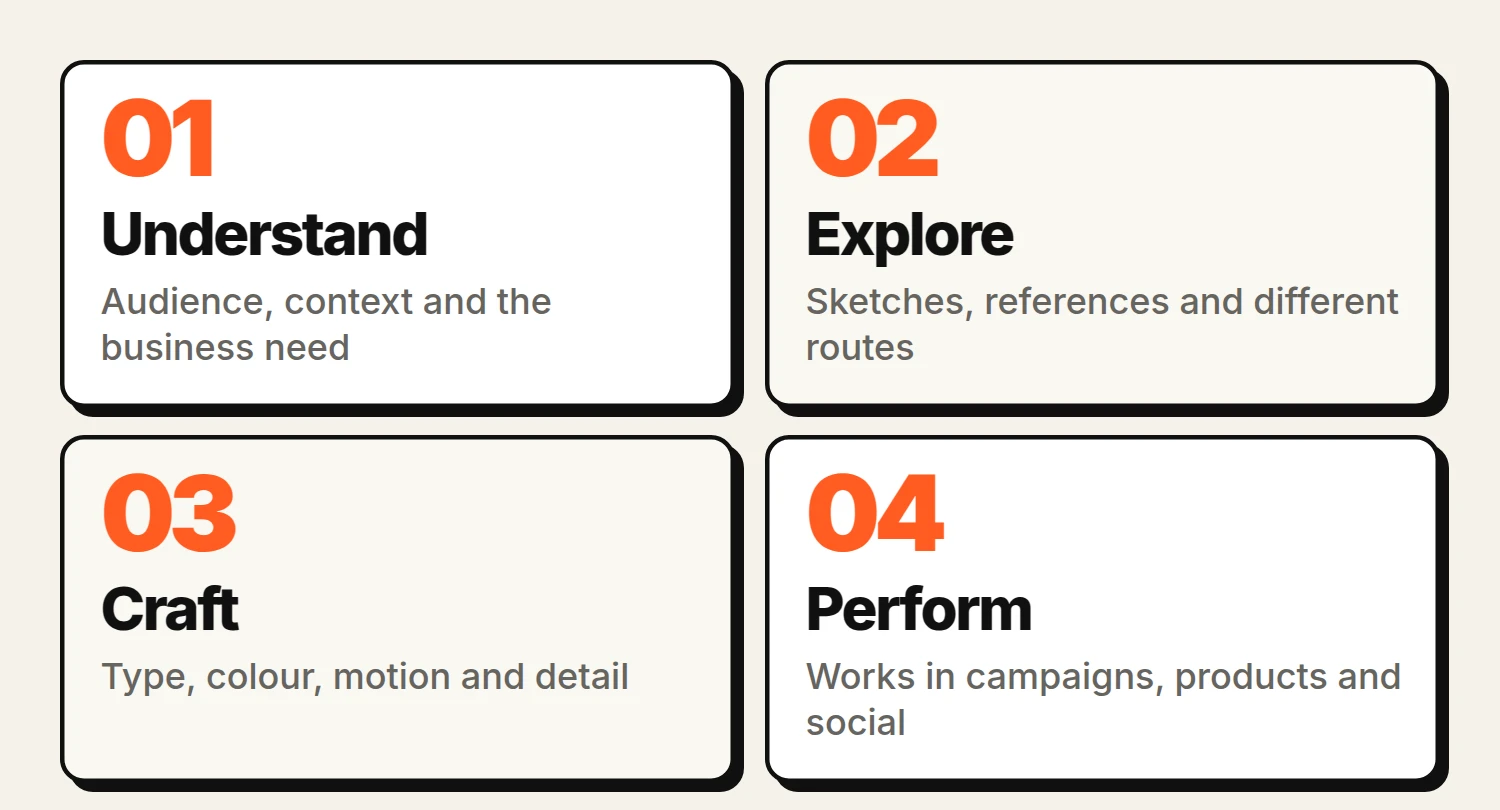
My own process has four steps. I start by understanding the audience, context and business need, then explore several deliberately different routes with sketches and references. After that I craft the chosen direction with attention to type, colour and detail, and finally check that it works in real use, across campaigns, products, search and social. The brief feeds the first step, and the clearer it is, the more time goes into the second and third.
Frequently asked questions
How long should a logo design brief be?
One to two pages is usually enough. Clear answers matter more than length.
Do I need a brief if the designer asks me questions?
Writing the brief first helps you think through the answers, and it gives the designer something to work from straight away. A short call can then fill in the gaps.
Should I include a logo I like as an example?
Yes, but explain what you like about it. Saying the colour, the shape or the simplicity is much more useful than only sharing a link.
What if I do not know my competitors or audience yet?
Write down what you do know and say that the rest is open. A designer can help with the thinking, but it is worth spending an hour on it yourself before you start.
Ready to brief a designer?
When your answers are written down, send them to me with a link to any references. If you also want the rules for using the finished identity written down, my article on brand guidelines shows what a good document contains, and you can read more about my brand identity work.
Comments (0)